Home
Riding Schools & Facilities
Tuen Mun Public Riding School
Programme Prospectus
Activities
Facilities
Our Coaches
Pokfulam Public Riding School
Programme Prospectus
Activities
Facilities
Our Coaches
Lei Yue Mun Public Riding School
Programme Prospectus
Activities
Facilities
Our Coaches
Beas River Equestrian Centre
Riding School
Livery and Retraining Centre
Activities
Facilities
Our Team & Horses
Pony World
Hong Kong Equestrian Performance Plan
HKJC Sponsored Riders
HKJC Sponsored Horses
Performance Support Team
Major Games
20th Asian Games 2026​
FEI World Championships Aachen 2026​
Pattaya Asia Championships 2025
Paris Paralympics 2024
Shows & Events
Learn & Care
RESTART Racehorse Aftercare Programme
Equestrian 101
Equine Welfare
Children and Vulnerable Adults Safeguarding Policy
News
General
Major Games
Forms
Public Riding Schools
Beas River Equestrian Centre (For Members)
Hong Kong Equestrian Performance Plan
Others
Racecourse Experience
Major Racedays & G1 Races
Happy Wednesday
Hospitality & Venues
Plan Your Visit
Horse Racing
Entries
Race Card
Current Odds
Results
Audio and Video
SpeedPRO
Football
Odds & Fixtures
Results
Previews
Useful Info
News
Videos
Membership
About Membership
The Hilltop in The Valley
Sha Tin Clubhouse
Beas River Country Club
The Beijing Clubhouse
The Racing Club
Charities & Community
Our Work
Community Projects
Events
Community Footprint
About HKJC
CEO Blog
Media Communication System
Operations & Season Highlights
Awards & Achievements
Careers
New Supplier Registration
Racecourse Experience
Horse Racing
Football
Membership
Charities & Community
About HKJC
Play Responsibly
  • No person under 18 is allowed to bet or enter premises where bets are accepted.
  • Betting with illegal or overseas bookmakers is against the law and offenders may be liable to imprisonment.
  • Don't gamble your life away. Call Ping Wo Fund hotline 183 4633 if you need help or counselling.
FAQ
 | 
Contact Us
 | 
Media Communication System
 | 
Site Map
 | 
Rules
 | 
Responsible Gambling Policy
 | 
Privacy
 | 
Disclaimer
 | 
Security Tips
Copyright © 2020-2026 The Hong Kong Jockey Club. All rights reserved.
Equestrian 101 Banner

Equestrian 101

Introduction

Equestrian sport is all about horsemanship. At its best, it requires perfect understanding, communication, co-operation and partnership between a rider and his or her horse. Equestrian sport can be regarded as the ultimate in team sports: the rider and horse must work together for years to create the perfect partnership and to hone feats of grace, agility and speed.

International equestrian sport comprises eight disciplines, of which the most popular in Hong Kong are Show Jumping, Dressage, Para dressage and Eventing.
c

Equestrian Videos


Beauty of Equestrian
Beauty of Horse
View All Video
Show Jumping
Show Jumping

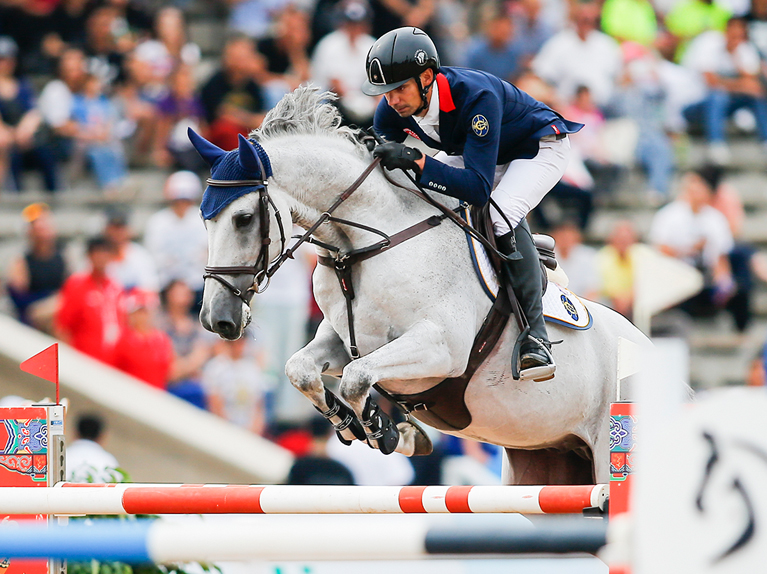
Show Jumping started in the early 1800s and is still the most popular equestrian sport. In this discipline, horse and rider are required to jump a course of fences without knocking the rails – or landing in the water jump. Faults will be picked up for every fence knocked down and for the first time a horse refuses to jump a fence. Time faults will be added if the horse and the riders do not complete the course in the time allowed.

Depending on the classification of the event and its rules, a jump-off may take place to determine the winner. The jump-off course may be shortened with fences raised, and or ridden against the clock. A second jump-off may take place in certain cases.

At the Olympics in 2020, the first competition is an individual qualifier, with the thirty best going followed to the individual final on day two. The team competition starts on day three and is open to twenty teams. This is the team first round, for teams of three horses and riders. Only the top ten teams go forward to the team final, taking place on the last day. The final includes a jump off and the fences are set to a height of 1.65 meters.
Dressage
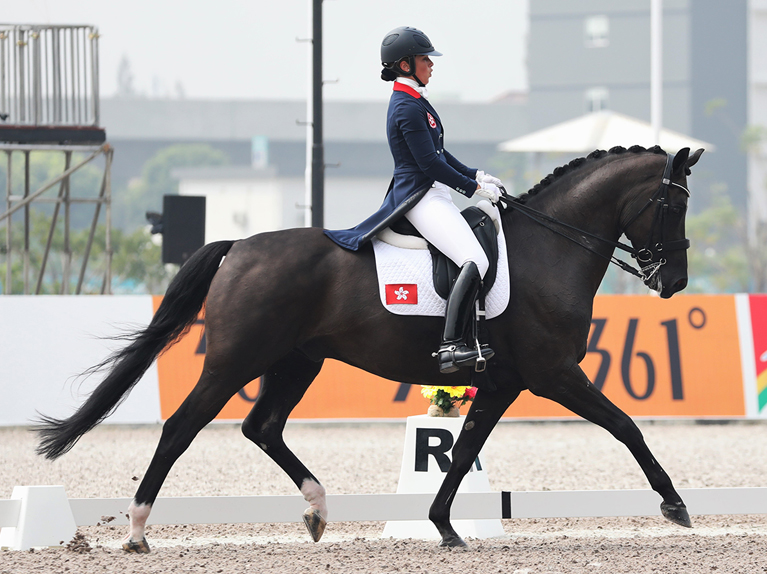
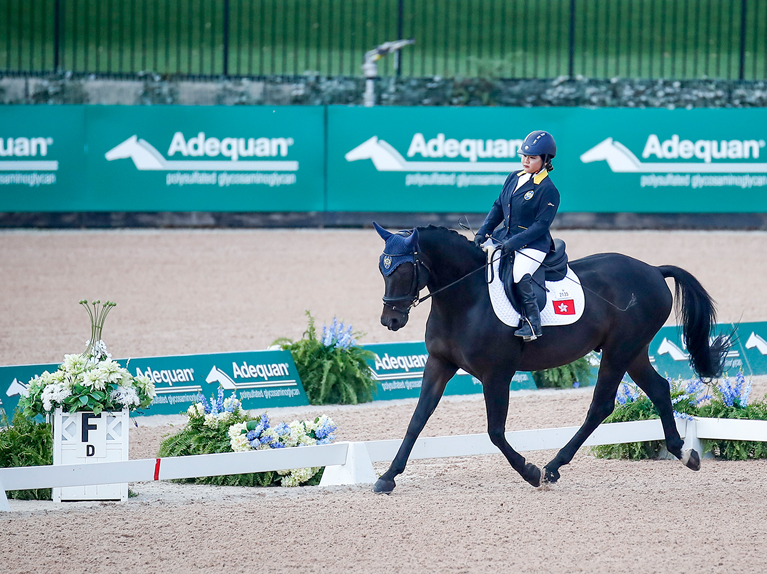
Dressage, derived from a French word meaning “to train”, dates back to the Renaissance era, when it gained recognition as a great training method for European cavalries. Often described as horses performing ballet, horse and rider must work together, in harmony to perform a routine of beautifully-choreographed set Dressage movements.

Dressage involves the horses and riders performing set movements in 60 x 20 metre or 40 x 20 metre arena. Tests are tailored to suit different standards. National federations set their own tests and rules based on those of the International Federation for Equestrian Sport (FEI) which governs the sport worldwide and schedules the international calendar.

Dressage at Olympic level, there are three separate competitions – the Grand Prix, which decides the team medals; the Grand Prix Special, which is equivalent to the individual semi-final; and the freestyle to music, which is choreographed by each rider. Horse and rider execute their own routine, set to music and are given marks for technical execution and artistic flair. The freestyle is final decider for the individual medals.
Show Jumping
Para dressage
Para dressage
Para dressage is a Paralympic Sport and is the same as its Olympic equivalent, other than adaptations for athletes with physical impairments. Athletes are grouped in “Grades” depending on the level of their disability. Grade I is the most impaired, with Grade V as the least impaired. Horses and riders perform dressage tests, designed to match their physical capabilities. As with dressage, there is a team test to decide the team medals and an individual and freestyle competitions that determine two sets of individual medals.
Eventing
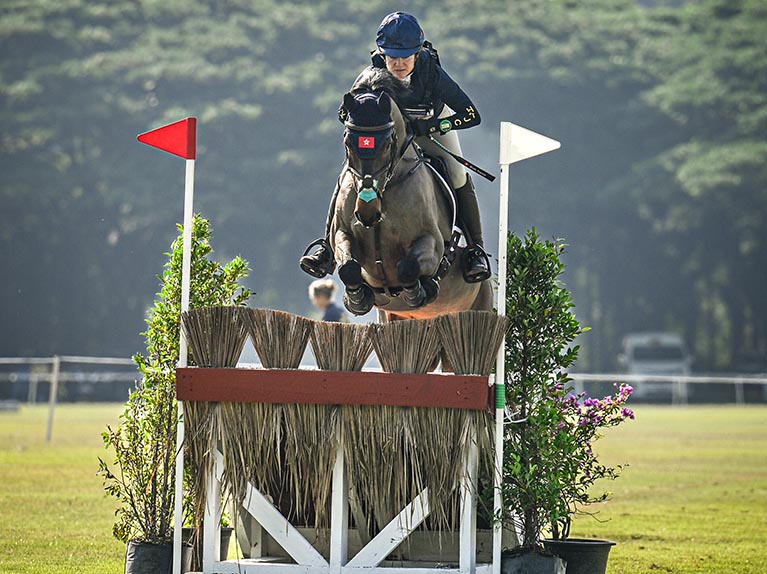
The Eventing competition is like an equestrian triathlon that combines both the Dressage and Show Jumping disciplines and adds a third – a cross-country test, featuring natural obstacles including ditches, banks and water jumps. The competition starts with a dressage test, followed by a cross-country day, when horse and rider tackle a course of fixed fences at speed. The final phase of Eventing is the show jumping. Competitors must ride the same horse throughout all three phases. This format takes place over one, two or three days. The total score of the three phases determines the winner; the combination with the least penalties coming out on top.
Eventing